↑
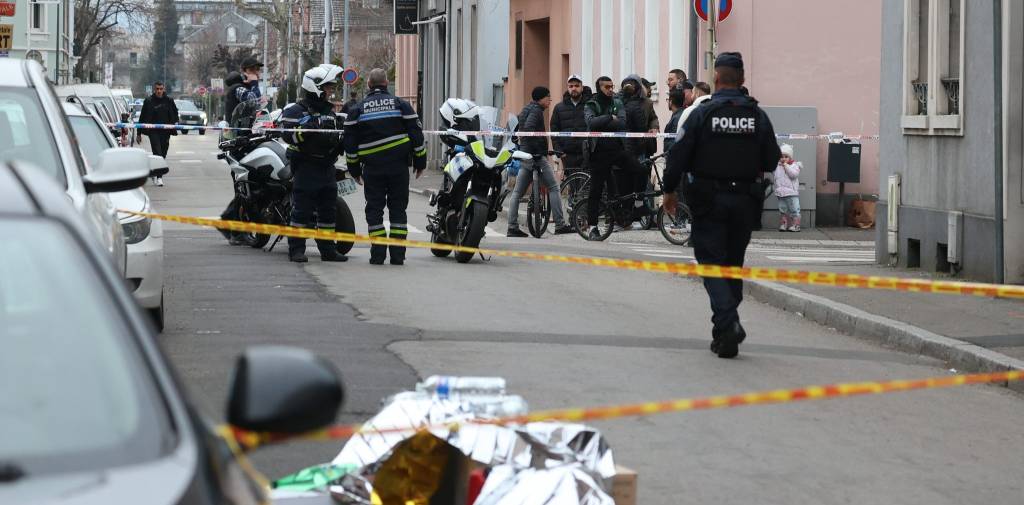
One person was killed and seven wounded in a knife attack in Mulhouse, France on 22 February 2025. The French president condemned the attack, calling it an ‘Islamist act of terrorism’. Image: Jean-Francois Frey / EPA / NTB
. . .
Terrorist threat to the West persists
In the past two years, attack-related activity against the West by militant Islamists has increased sharply. The terrorist threat from militant Islamist groups mainly stems from the Islamic State (IS), either via inspired or directed attacks. IS’s Afghanistan affiliate (ISKP) and IS Somalia pose the greatest threat in terms of providing attack direction.
Over the past decade, the IS threat to Europe has taken on a different character. Today, the number of averted attacks is high, and the ones carried out are mainly conducted by IS-inspired lone actors using simple means.
Towards a new caliphate
The most powerful affiliates of al-Qaeda (AQ) and IS, both militarily and financially speaking, are now located in Africa. Several communities on the continent are marked by deep, local lines of conflict and an absent state apparatus. Both organisations exploit this by absorbing or forming alliances with local militant groups.
Both IS and AQ have an overarching goal of establishing a caliphate ruled according to their ideology. Both seek to position themselves as rivals to the national authorities. In particular, IS’s West Africa Province (ISWAP) in Nigeria and the AQ affiliates al Shabaab and JNIM in Somalia and Mali respectively have made significant territorial gains. The progress in Africa has been vital in order to maintain a global foothold. The groups pose a considerable threat in their own core areas, including against Western interests.
Should IS and AQ succeed in establishing a caliphate, this could inspire Western sympathisers to join them; an increase in European foreign fighters would further exacerbate the threat to Norway and the West. European foreign fighters have used their contacts and language skills to incite and direct terrorist attacks in Europe in the past.
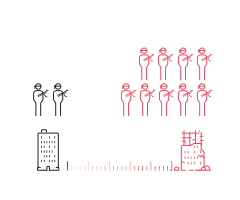
Conflict and political instability provide fertile ground for terrorist groups. The Islamic State (IS) and al-Qaeda (AQ) are set on expanding in such conflict areas, where living standards are poor and the authorities are either wholly or partially absent.
Both organisations are re-building systematically, expanding their affiliates in Africa and Asia while bolstering their finances, military capabilities and ability to carry out terrorist attacks.

Persistent terrorist threat from right-wing extremists
In 2025, there was a slight increase in right-wing extremist attack activity in the West, and the activity is expected to stay at a comparable level in 2026. The terrorist threat from right-wing extremists stems mainly from lone actors linked to transnational online groups and networks. In these communities, ideology is less central than before, with discussion increasingly dominated by intensely violent content. This particularly applies to groups with a younger membership demographic. However, the lack of established right-wing terrorist organisations limits their ability to plan, finance and coordinate complex attacks.
It is likely that actors linked to the Russian state are active in digital right-wing extremist networks, and that they may both contribute to radicalisation and help right-wing extremists become better equipped to carry out attacks. The focus on violence combined with the involvement of state-affiliated actors could heighten the right-wing extremist threat in the longer term.
The Middle East