↑
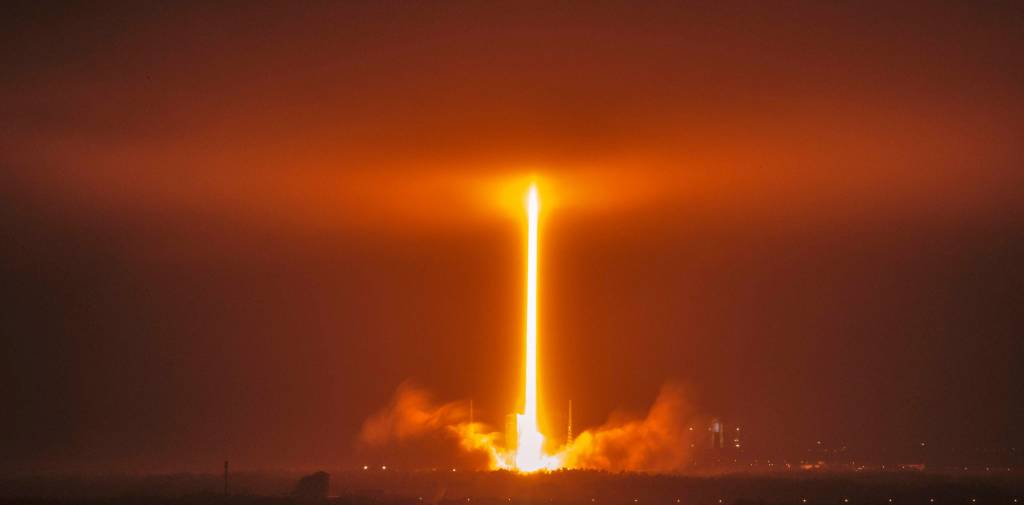
A modified Long March 7 launch vehicle carrying the satellite Shijian-28 blasts off from Wenchang Space Launch Site in China on 30 November 2025. Image: Wang Jiangbo / Xinhua / NTB
. . .

Western tech companies subject to targeted procurement attempts
Russia still uses significant amounts of Western technology in its development and production of weapons, and consequently also in its war against Ukraine. The Chinese, Iranian and North Korean armed forces also use Western technology. Strategic cooperation between these states, and the use of civilian technology in military weapons programmes, presents a challenge to mechanisms intended to prevent sensitive goods and technology from falling into the wrong hands.
The use of civilian technology in military programmes is a global phenomenon, also found in Russia, where Norwegian-manufactured maritime, communications and navigation technologies are highly sought-after. For instance, navigation equipment developed for civilian use may be used in artillery systems, air defence systems and drone navigation antennas. China and Iran are also looking to Norwegian technology in these areas.
Actors involved in this kind of activity are circumventing Western sanctions by setting up covert procurement networks and exploiting the EU’s single market in order to obtain Western technology. The use of European intermediaries helps conceal links to the recipient country. Companies in free trade areas such as the United Arab Emirates are also used to obscure the end user.
China is helping Russia by selling Chinese-manufactured technology, which often contains Western components. Chinese businesses are also re-exporting large amounts of Western technology. Finally, Russia procures considerable amounts of technology, as well as sanctioned goods, from or via India, Türkiye and several Central and South-East Asian states.
Nevertheless, sanctions are having a considerable impact. The Western sanctions regime is driving both costs and lead times on foreign technology. It has caused significant delays in the production and development of several Russian weapons systems. Russian dependence on Western technology will not lessen in the near future, and various forms of procurement attempts directed at Norwegian and allied technology manufacturers will continue.
New START soon to be history
If the United States and Russia allow New START to lapse in February 2026, there will, for the first time since 1972, be no bilateral agreement between the two countries that regulate nuclear weapons. The lack of a binding agreement will pave the way for nuclear rearmament. New START regulated the number of deployed intercontinental nuclear weapons, and despite Russia’s suspension of the agreement in 2023, the Kremlin has kept to its basic limitations.
Russia is looking to use strategic dialogue and the prospect of a ‘New New START’ as a bargaining chip in its relationship with the United States, and to present itself as a responsible nuclear weapons power. Although the United States has expressed a desire to bring China into any potential future agreements, Beijing considers this to be out of the question until it achieves parity with the United States. As a result, the prospect of a trilateral agreement equivalent to New START seems remote.
Russia: new weapons to challenge Western defence systems
Despite its struggling economy, Russia is prioritising the development of new strategic weapons systems. On the one hand, the Kremlin is seeking to create uncertainty in NATO and play up European fears of nuclear escalation. On the other, the Russian regime is uncertain of its own ability to keep up with nuclear and conventional development in the West.
Russia’s growing military cooperation with China is an important factor in Russian arms development, as are experiences gained from the Ukraine war. Systems such as hypersonic glide vehicles and nuclear-powered cruise missiles and torpedoes are designed to penetrate existing defence systems and circumvent arms control treaties. Some weapons are intended to challenge NATO countries’ ability to detect, track and avert a nuclear assault. They are also intended to ensure retaliation regardless of the prevailing conditions.
One example is the Skyfall cruise missile, which has nuclear propulsion. The missile has demonstrated extreme range, enabling it to attack from unexpected directions and thereby circumvent air and missile defences. In autumn 2025, the missile travelled several thousand kilometres over a test site on Novaya Zemlya. Even with this progress, years of testing remain before the system can enter into service.
A Skyfall missile crashing during testing could cause local radioactive emissions, with heightened radiation levels limited to a few kilometres from the impact site.
Another example is Oreshnik, an intermediate-range ballistic missile. Russia has used this missile twice in Ukraine, first in an attack on an industrial site in Dnipro in autumn 2024, and then again in January this year, when a missile was fired against Lviv in western Ukraine.
The Kremlin has repeatedly mentioned Oreshnik in its rhetoric against European support to Ukraine, as well as directly to Ukraine. The missile is capable of reaching anywhere in Europe and is armed with 36 small warheads that impact ground targets at very high speeds. Due to the small size of the warheads, this system does not add significantly more firepower than other Russian short- and intermediate-range missiles, but the large number of warheads offers high penetrability against missile defences.
Poseidon is a submarine-launched, nuclear-powered torpedo capable of carrying a nuclear warhead. The reactor is intended to give this weapon intercontinental range. The torpedo requires a large and purpose-built submarine as a launch platform. Due to its high complexity, developing this system will take a long time.
Russia is also developing Sarmat, a new intercontinental missile. Testing in the High North was suspended after the missile exploded in its silo at Plesetsk in autumn 2024, and testing continues from a base further south. This weapon is important to Moscow because it is considered crucial to Russia’s continued strategic deterrence.
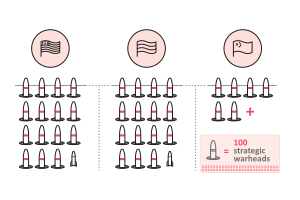
New START limits the number of strategic nuclear warheads that the United States and Russia may deploy, to 1,550 each. China's arsenal now exceeds 600 and is still growing.
Both the United States and Russia have tactical nuclear weapons in additionto this, with Russia assessed to have around twice as many as the United States, approximately 2,000.
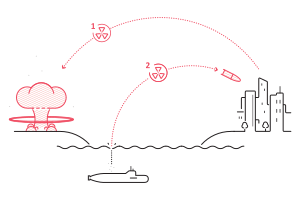
In nuclear weapons strategy, retaliatory capability and second-strike capability involve ensuring an attacker can be subjected to a nuclear counter attack with unacceptable consequences. Second-strike capability is therefore key to strategic deterrence.
Both strategic submarines and mobile, land-based launch platforms can offer second-strike capability and retaliatory capability.
China: rapid armament
China’s nuclear arsenal has grown substantially in recent years, from more than 200 warheads in 2020 to over 600 at the start of 2026, and is set to increase further. Land-based nuclear weapons will remain the backbone of China’s arsenal, divided among mobile launch pads and silo sites. However, China is also investing in submarine- and air-launched strategic nuclear weapons.
China’s submarine-launched ballistic missiles are capable of reaching the US mainland from Chinese littoral waters, while air-launched ballistic missiles are well-suited to attacking pinpoint targets in the Indo-Pacific. By dispersing its strategic nuclear weapons across multiple platforms, China can achieve rapid retaliation by using silo-based missiles and secure retaliation by mobile, land-based launch platforms and submarines.
In parallel with the increase in nuclear weapons, China is continuing its development of missiles capable of carrying both conventional and nuclear warheads. China is likely developing nuclear warheads with lower yield for its regional missiles, making them suitable for use against military targets. By prioritising the development of ballistic missiles and hypersonic glide vehicles for use against targets at sea, China is seeking to shift the area of operations for US carrier strike groups further away from the Chinese mainland.
Russia and China preserve ability to produce lethal weapons
Although Russia is signatory to both the Biological Weapons Convention and the Chemical Weapons Convention, the country retains the ability produce weapons and means of delivery due to existing expertise as well as industrial and research facilities. In addition, Russia continues using less-lethal agents such as teargas and chloropicrin in Ukraine.
Although China signed the Biological Weapons Convention in 1984, Chinese research institutions affiliated with the armed forces have for years been working to identify and test highly toxic substances. This dual-use research, combined with extensive biotechnology investments and historic expertise from previous biological weapons programmes, means that China possesses a considerable capacity for developing and producing biological weapons.
Technological progress revolutionising scope for biological weapons
Advanced biotechnology combined with artificial intelligence (AI) and big data makes it possible to design new toxic substances and microorganisms with specific characteristics. AI tools could be used to generate recipes for toxic substances that would not be detected in standard analyses, and which could be ordered from commercial suppliers.
Access to large amounts of genetic big data and health data will facilitate medical progress. However, state actors could use AI to process such data in order to identify genetic traits that are unique to potential targets. The ambition could be to develop agents with discriminating effect, in order to target both humans and food production.